Skip to content

Community Accelerated

Research Exchange

Welcome to OCRA's Research Exchange, a new way to connect patients, researchers, and data to accelerate gynecologic cancer research. Explore research shaped by real patient experiences, stay current on key findings, validate insights, and discover opportunities for collaboration.

Living Lab Engagement

5,123

Surveys Completed

Participants
610
Wearables
63
EHR linked
110
Living Lab

Your Experience Powering Progress

Living Lab

The Living Lab, a patient registry, is a secure platform that offers a way to contribute to one of the largest data sets for ovarian and uterine cancers. It captures patient-reported outcomes, quality of life measures, and financial impacts—information often missing from traditional research studies. By participating, you are helping to create tangible progress as well as a lasting legacy.


Explore Living Lab

Discovery Lab

Collaboration at the Speed of Inspiration

Discovery Lab

Our mission is to foster collaborative discovery at global scale. Researchers can collaborate in real-time with global colleagues, access patient reported priorities to guide their work, bypass traditional publication bottlenecks through micropublications, and contribute to a collaborative platform where individual discoveries build upon each other reshaping the traditional research cycle from isolated, slow-moving studies to rapid, interconnected advances that can immediately impact patient care.

Explore Discovery Lab

Digests

AI-collated, expert-reviewed summaries of the latest open access gynecologic research. Each digest matches the areas of interest for patients, advocates, researchers, and clinicians, then validates findings against the broader literature. New voices and timely results surface here as the field moves.

Ovarian

2026

August 2026

This Month in Ovarian Cancer Research

The month sat with treatments already in wide use. The final quality-of-life analysis from a major PARP inhibitor trial found maintenance itself did not make people feel worse than placebo, while recurrence did, and that decline never fully reversed. Antibody-drug conjugates stayed the most active area in recurrent disease, and two studies asked who is left out of the evidence.

Read digest

Uterine

2026

August 2026

This Month in Uterine Cancer Research

A month about refining decisions rather than adding new ones. Pooled trial data concluded tumor grade no longer needs to guide treatment planning in MMR-deficient disease, and two teams disagreed outright on checking lymph nodes during surgery for precancer. Adding a second drug to immunotherapy maintenance delayed progression without extending life.

Read digest

Cervical

2026

August 2026

This Month in Cervical Cancer Research

Most of the month's work was about why prevention is not reaching everyone. A network meta-analysis found one- and two-dose HPV schedules retain meaningful protection, which matters where three doses are unaffordable, and studies from Finland and Mexico showed HPV type, not just HPV status, sharpens who needs colposcopy now.

Read digest

Vulvar & Vaginal

2026

August 2026

This Month in Vaginal & Vulvar Cancer Research

Both digests led with prevention: a global modelling study put the vaginal and vulvar cancer HPV vaccination could prevent in lower-income countries in the millions, while a systematic review found uptake stalls on knowledge and trust as much as cost. Vulvar work centered on the disease's two separate origins, HPV and chronically inflamed skin.

Read digest

Community

A curated stream from the OCRA community: patient stories, researcher updates, and cross-disciplinary highlights chosen to spark connection and conversation.

Conference

News from the 2026 Society of Gynecologic Oncology (SGO) Annual Meeting

New ovarian and endometrial cancer treatments are changing the game. From a newly FDA-approved combo for platinum-resistant ovarian cancer to breakthroughs in immunotherapy, ADCs, and peer support, here's what we are most excited about from the 2026 Society of Gynecologic Oncology annual meeting.

Read more

What a Patient Registry Can Do for Gynecologic Cancer Research

Commentary

What a Patient Registry Can Do for Gynecologic Cancer Research

Researchers still can't explain why the same treatment works for one gynecologic cancer patient but not another — or why outcomes differ so sharply by race and income. A patient registry could change that. Here's what they are, how they've transformed other diseases, and why gynecologic cancer needs one.

Read more

Turning Experience Into Progress: One Patient's Role in Advancing Uterine Cancer Research

Spotlight

Turning Experience Into Progress: One Patient's Role in Advancing Uterine Cancer Research

Zenia Dacio-Mesina was diagnosed with stage 4 uterine leiomyosarcoma after years of dismissed symptoms. The rare cancer upended her life — 65 infusions, daily medications, and a son who had to grow up too soon. Her story shows why registries like OCRA's Living Lab matter: capturing not just clinical data, but the full human cost of disease.

Read more

Living Lab Video Testimonial: Rebecca Esparza

Video

Living Lab Video Testimonial: Rebecca Esparza

Diagnosed on Thanksgiving Day at 30, no health insurance, stage four by the time treatment started — Rebecca is alive because of research. Now she's paying it forward. Here's why she believes every ovarian and uterine cancer survivor should join OCRA's Living Lab.

Play now

Conference

News from the 2026 American Society of Clinical Oncology (ASCO) Annual Meeting

ASCO 2026 highlights for gynecologic cancers: immunotherapy plus chemotherapy remains standard for advanced endometrial cancer, with new long-term data confirming survival benefits. Antibody drug conjugates show promise across ovarian, endometrial, and cervical cancers. Relacorilant plus nab-paclitaxel benefits platinum-resistant ovarian cancer regardless of prior taxane use.

Read more

Overview of the Canadian Conference on Ovarian Cancer Research

Conference

Overview of the Canadian Conference on Ovarian Cancer Research

The 12th Canadian Conference on Ovarian Cancer Research brought together nearly 300 attendees in Vancouver to share advances across the cancer continuum. Highlights included new fallopian tube imaging tools, blood-based early detection tests, precision treatment approaches, adaptive clinical trial designs, and a growing focus on survivorship including mental health, menopause, and quality of life.

Read more

Why We Built the Community Accelerated Research Exchange

Interview

Why We Built the Community Accelerated Research Exchange

When OCRA asked its scientific community what it would take to cure ovarian cancer, the answers pointed in every direction—and that unexpected result changed everything.

Read more

Living Lab Testimonial: Kevin Holcomb, MD, Chair, Obstetrics and Gynecology, Northwell Health

Video

Living Lab Testimonial: Kevin Holcomb, MD, Chair, Obstetrics and Gynecology, Northwell Health

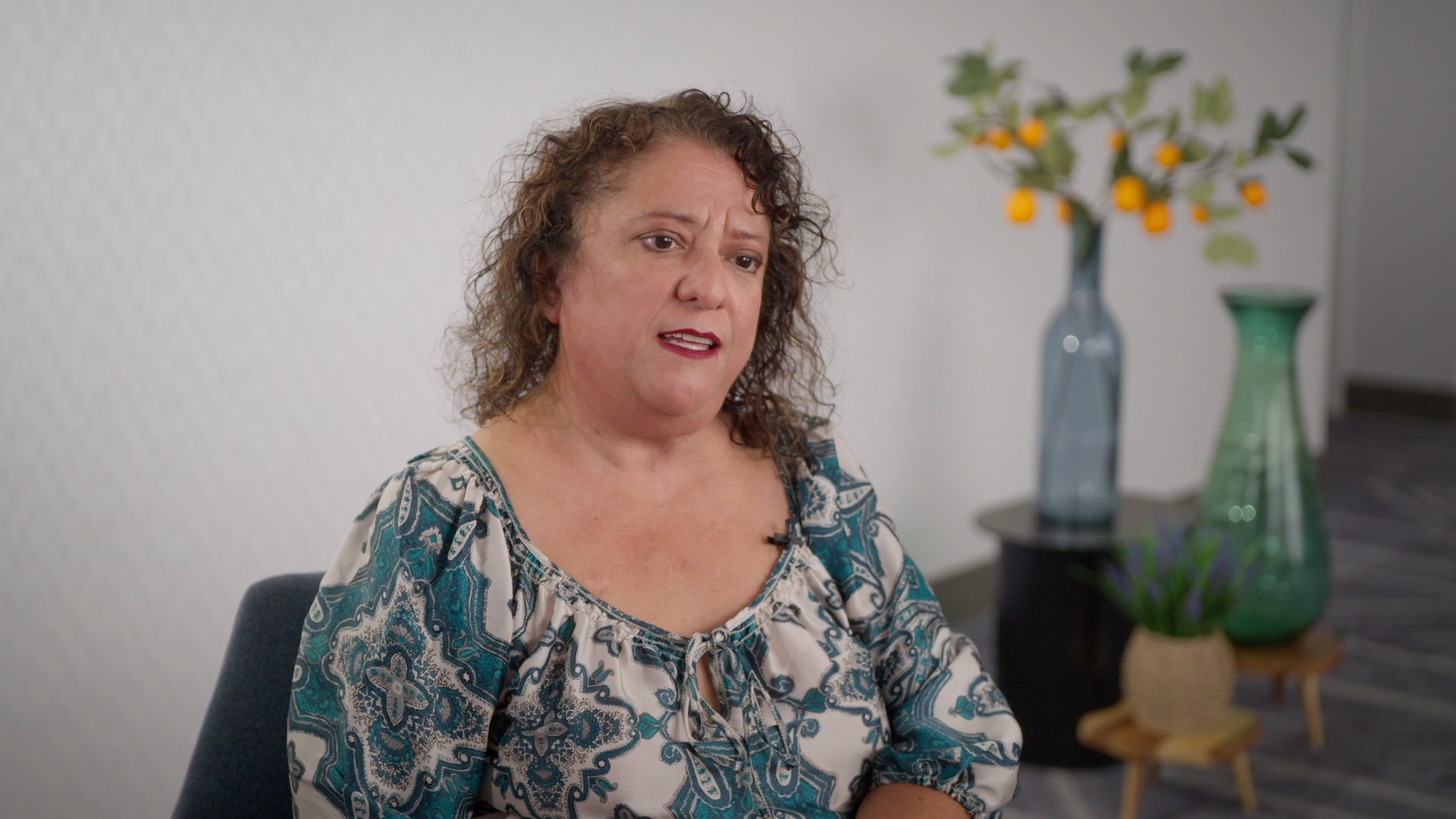
“Your experience is power.” A gynecologic oncologist explains why OCRA's Living Lab registry is different — patients stay connected, see how their data is used, and get information back. Here's why he'd tell every patient: sign up.

Play now

Nutrition for the Menopause Transition and Beyond

Educational

Nutrition for the Menopause Transition and Beyond

A menopause-focused nutrition expert explains how hormonal changes increase risks for heart disease, diabetes, bone loss, and weight gain, and shared practical ways to stay healthy. Key recommendations included a plant-forward, high-fiber diet, adequate protein, regular exercise, good sleep, and personalized nutrition counseling to improve long-term health and quality of life.

Read more

Mapping Tumor Evolution to Improve Treatment

Interview

Mapping Tumor Evolution to Improve Treatment

Ovarian cancer emerges from a constantly evolving ecosystem of cells. The MSK SPECTRUM project is one of the most ambitious efforts to map that evolution in the clinical setting by studying patients over time. This work combines single-cell genomics with mathematical models of evolutionary processes to understand how tumors adapt, resist therapy, and interact with the immune system.

Read more

Data

Highlighted datasets from the Discovery Lab, inviting you to explore new data as it gets added.

Dataset

A single-cell atlas of the aging mouse ovary (Isola et al. 2024, Nature Aging)

A 2024 study titled "A single-cell atlas of the aging mouse ovary," frequently discussed in relevant literature, provides a comprehensive map of transcriptomic changes in ovaries from young (3-month) and reproductively aged (9-month) mice. The atlas reveals a doubling of immune cells (particularly lymphocytes) and enhanced fibrotic pathways in aged mice.

View dataset

Dataset

MSK Endometrial Cancer Ancestry Cohort

The MSK Endometrial Cancer Ancestry Cohort (msk_ec_anc) study, published in Cancer Discovery in 2023, is a comprehensive genomic analysis of 1,882 endometrial cancer patients aimed at understanding the molecular basis of racial disparities in endometrial cancer survival.

View dataset

Dataset

Metastatic Endometrial Cancer - HER2/ERBB2 cohort

This study analyzes 69 metastatic endometrial cancer samples, identifying ERBB2 (HER2) pathogenic mutations as defining a distinct, often non-amplified subgroup (84% of cases) characterized by low HER2 expression (0/1+ in 66% of cases) and high co-occurrence with MSI-High/POLE subtypes.

View dataset

Dataset

Cellular heterogeneity of human fallopian tubes in normal and hydrosalpinx disease states

Cellular heterogeneity of human fallopian tubes in normal and hydrosalpinx disease states (Ulrich et al., 2022) presents a single-cell RNA-seq atlas of the human fallopian tube (FT) in both healthy and diseased states.

View dataset

Dataset

Mismatch Repair Deficient Endometrial Cancer

Research from Memorial Sloan Kettering (MSK) between 2022 and 2023 reveals that mismatch repair deficient (MMRd) endometrial cancer is heterogeneous, with prognosis and immunotherapy response driven by whether the deficiency is caused by genetic mutations (better prognosis) or epigenetic silencing (worse prognosis).

View dataset

Insights

Selected graphical representations of information relevant to the gynecologic cancer community. Use them to ground your next grant application, advocacy pitch, or panel discussion in the numbers shaping the field.

Events

Scientific and patient conferences and events shaping the gynecologic cancer community in the months ahead. Hover the list to spotlight an event on the map, or zoom the map to filter the schedule.

Sep 16 – 17, 2026

OCRA's International Gynecologic Cancer Conference

OCRA's FREE International Gynecologic Cancer Conference is a virtual educational event providing comprehensive coverage of gynecologic cancer topics for patients, caregivers, and healthcare professionals.

Event details

Sep 24 – 25, 2026

Patient-Centered Oncology Care

A two-day national oncology conference bringing together leaders across cancer care for forward-looking education, practical strategy, and high-value connection. Nashville, Tennessee.

Event details

Oct 1 – 3, 2026

IGCS 2026 Annual Global Meeting

The Annual Global Meeting of the International Gynecologic Cancer Society, bringing together a multidisciplinary community to exchange insights and update clinical practice. Montreal, Canada.

Event details

Sharing Data Saves Lives. Join the Research Community.

The Research Exchange is a collaborative platform that connects patients, researchers, clinicians, and advocates through a single, global hub — enabling gynecologic cancer research to move faster from discovery to patient care.